
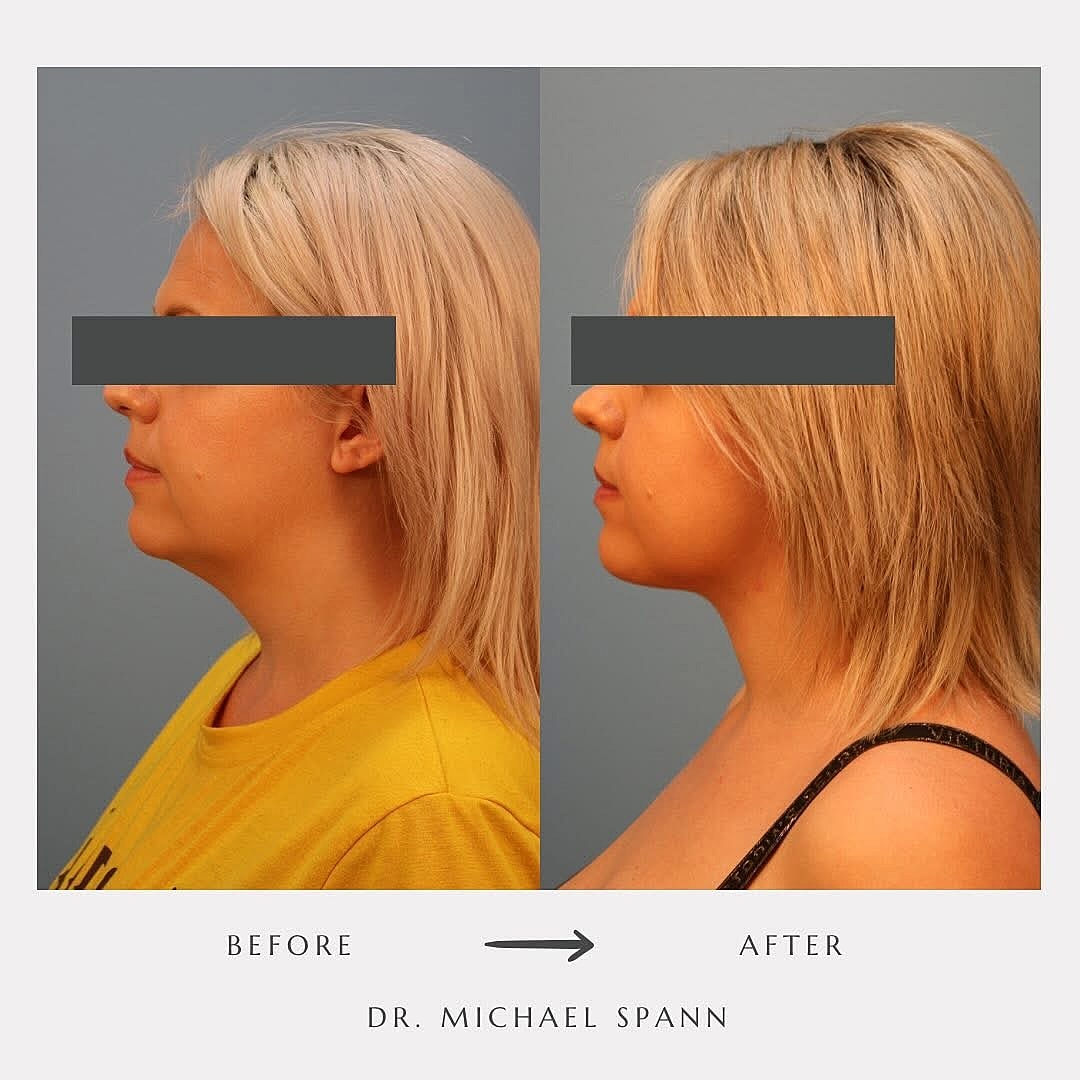
If you're researching deep plane facelift surgery in Northwest Arkansas, you've probably encountered conflicting information about the neck. Some surgeons open the neck routinely; others rarely do. So what's the right approach?
As a board-certified plastic surgeon performing deep plane facelifts in Fayetteville, I take an individualized approach. The decision to include a submental (under-chin) incision depends entirely on your anatomy.
What Is a Deep Plane Facelift?
A deep plane facelift is an advanced surgical technique that repositions the deeper structural layers of the face—not just the skin. By releasing key ligaments and lifting the SMAS (superficial musculoaponeurotic system) as a single unit with the overlying fat and skin, this technique produces more natural, longer-lasting results than traditional facelift methods.
The deep plane technique is particularly effective for patients with significant jowling, midface descent, and early neck laxity. However, certain neck concerns require direct access through a small incision hidden beneath the chin.
Three Reasons to Open the Neck During a Deep Plane Facelift
1. Submental Fullness (Double Chin)
Submental fullness—commonly called a double chin—is excess fat beneath the chin that creates a heavy, undefined neck contour. While some improvement occurs with facelift techniques alone, moderate to significant submental fat is best addressed through direct access.
Through a small incision hidden in the natural crease under the chin, I can precisely sculpt this area using direct excision or liposuction, creating the defined cervical-mental angle patients desire.
2. Platysmal Banding
The platysma is a thin muscle that spans from your chest to your lower face. As we age, the medial edges of this muscle can separate and become visible as vertical neck bands—those cords you see when you clench your teeth or strain your neck.
No amount of lateral lifting will correct platysmal bands. They require direct repair through the submental incision, where I can suture the muscle edges back together in the midline (platysmaplasty) and create a smooth, youthful neck contour.
3. Submandibular Gland Enlargement or Ptosis
The submandibular glands are salivary glands located just below the jawline. In some patients, these glands are naturally enlarged (hypertrophy) or have descended below their normal position (ptosis). This creates persistent fullness in the upper neck that mimics fat—but won't respond to liposuction.
During your consultation at my Fayetteville office, I specifically evaluate these glands. When they contribute to neck fullness, I can address them through the submental incision using partial reduction or suspension techniques.
When a Submental Incision Isn't Necessary
Many deep plane facelift patients in Northwest Arkansas don't need the submental incision. If you have minimal submental fat, no visible platysmal banding, normal submandibular glands, and good skin elasticity, we can often achieve excellent neck rejuvenation through the facelift incisions alone.
Why Choose a Board-Certified Plastic Surgeon in Northwest Arkansas
Deep plane facelift surgery requires advanced training and experience. As a member of the American Society of Aesthetic Plastic Surgeons (ASAPS) and the American Society of Plastic Surgeons (ASPS), board-certified in both plastic surgery and general surgery, I've dedicated over 20 years to achieving natural, lasting facial rejuvenation results.
I'm one of the few surgeons in Arkansas trained in the deep plane facelift technique, bringing expertise developed alongside top surgeons in Dallas, Beverly Hills, and New York to patients right here in Fayetteville.
Schedule Your Deep Plane Facelift Consultation in Fayetteville
Every face ages differently, which is why I spend considerable time during consultations evaluating not just what you see in the mirror, but what's happening beneath the surface—including submental fat, platysmal muscle tone, submandibular gland position, and skin quality.
Michael Spann, MD: Northwest Arkansas 3733 N Business Dr, Suite 200 Fayetteville, AR 72703 (479) 900-9795
Serving patients from Fayetteville, Bentonville, Rogers, Springdale, and throughout Northwest Arkansas.
Frequently Asked Questions: Deep Plane Facelift in Northwest Arkansas
What is the recovery time for a deep plane facelift? Most patients return to non-strenuous activities within two weeks. Swelling and bruising gradually resolve over four to six weeks, with final results visible at three to six months.
Does the deep plane facelift last longer than a traditional facelift? Yes. Because the deep plane technique addresses the underlying structural causes of facial aging rather than simply tightening skin, results typically last 10 to 15 years.
Will I have visible scars? Incisions are placed within the natural creases around the ear and, when necessary, in the shadow beneath the chin. With proper healing, these scars become nearly imperceptible.
How do I know if I need my neck opened during a facelift? This is determined during your consultation. I evaluate your submental fat, platysmal muscle bands, and submandibular glands to determine whether direct neck access will improve your result.
Where is Dr. Spann's Northwest Arkansas office located? Our Fayetteville office is located at 3733 N Business Dr, Suite 200, Fayetteville, AR 72703. We serve patients throughout Northwest Arkansas, including Bentonville, Rogers, and Springdale.