Published
10 minute read
For nearly two decades, breast augmentation has been one of the most-requested procedures I perform for women in Northwest Arkansas. And for most of that time, the conversation followed a familiar arc: I would walk a patient through implant choices, incision options, recovery expectations, and the trade-offs that come with traditional augmentation. Patients understood those trade-offs, but they rarely loved them.
This year, that conversation changed.
After completing my Motiva Preservé™ certification training, I am the first and only plastic surgeon in Arkansas certified to perform this minimally invasive breast augmentation technique. For my patients in Bentonville, Fayetteville, Rogers, Springdale, and the surrounding region, that means access to a procedure that preserves the breast's native anatomy, reduces the scope of dissection, and shortens recovery — without compromising the elegant, natural-looking outcomes that have always defined my practice.
This post is my attempt to explain what Motiva Preservé actually is, why I pursued certification, and what NWA patients should understand before considering it.
What Is Motiva Preservé™?
Motiva Preservé is a minimally invasive breast augmentation technique developed by Establishment Labs, the manufacturer of Motiva implants. It is not a different implant. It is a different way of placing the implant. One that uses a smaller incision, a precisely engineered set of instruments, and a tissue-sparing surgical sequence to create the implant pocket without the broader dissection that traditional augmentation requires.
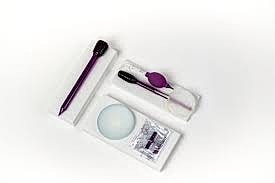
The technique uses three purpose-built tools:
- The Motiva Channel Separator — used to tunnel through tissue planes with precision rather than cutting broadly.
- The Motiva Inflatable Balloon — used to expand the pocket through controlled tissue elongation, working with the body's natural elasticity rather than against it.
- The Motiva Insertion Sleeve — used to deploy the SmoothSilk® Ergonomix2® implant through the prepared channel without contamination or excessive handling.
Each step is designed around a single principle: disturb as little tissue as possible while still creating an ideal pocket for the implant.
That principle is the entire reason I committed to this certification.
Why I Pursued Motiva Preservé Certification
My surgical philosophy across every procedure I perform — facelift, rhinoplasty, body contouring, and breast surgery alike — is built around respect for native anatomy. I trained with surgeons whose work I admire deeply (Marten, Hamra, and Barton in facial surgery) precisely because their techniques are organized around preserving structure, not just changing it. The most enduring aesthetic results, in my experience, come from operating with the body rather than around it.
Motiva Preservé is the breast augmentation embodiment of that same idea.
When I evaluated the technique against my existing approach, three things stood out:
- Smaller incision. A shorter, more discreet incision means less visible scarring and a faster healing window.
- Less dissection. Reduced tissue disruption translates directly to less postoperative pain, less bruising, and a more predictable recovery.
- Faster return to normal life. Patients who return to desk work, school drop-offs, and light daily activity within a few days — not a few weeks — are not anomalies under this protocol. They are the expectation.
For NWA patients, many of whom are working professionals, mothers, or both, that recovery profile is meaningful. The procedure has to fit into a real life.
I also pair Preservé with subfascial implant placement — positioning the implant beneath the pectoralis fascia rather than under the muscle itself. Subfascial placement avoids the animation deformity (visible muscle flexion distorting the implant) that some patients experience with submuscular placement, while still providing soft-tissue coverage over the implant edge. The combination of subfascial positioning and the Preservé technique is, in my view, the most refined breast augmentation approach currently available.
How the Procedure Works, Step by Step
Here is what a Motiva Preservé augmentation looks like in my OR at our accredited Bentonville surgery center:
1. Tunneling with the Motiva Channel Separator. After the inframammary incision is made, I use the Channel Separator to create a precise tunnel toward the planned implant position. This tool is engineered to follow the correct tissue plane without the wider undermining a traditional dissection would require.
2. Controlled tissue elongation with the Motiva Inflatable Balloon. The balloon is introduced and gradually inflated to create the implant pocket. Because the expansion is gradual and pressure-controlled, the surrounding tissue elongates rather than tearing. This is the step that, more than any other, distinguishes Preservé from conventional augmentation.
3. Deployment of the SmoothSilk® Ergonomix2® implant. The implant is placed using the Motiva Insertion Sleeve, a no-touch delivery system that minimizes implant handling and protects the SmoothSilk surface. Once positioned, the pocket is checked, and closure is performed in layers.
The total operative time is comparable to a traditional augmentation. The recovery profile is not.
What Makes Motiva Implants Different
I want to address the implants themselves briefly, because the technique is only half the story.
Motiva's SmoothSilk® Ergonomix2® implants are sixth-generation devices with several features that, in my hands, produce reliable results:
- SmoothSilk surface technology — a nanotextured surface designed to reduce inflammatory response and capsular contracture risk compared with older textured implants.
- Ergonomix2 form — a highly cohesive but dynamically responsive gel that holds shape upright and softens naturally when the patient is supine. The result reads as natural breast tissue rather than as a fixed shape.
- ProgressiveGel Ultima filler — engineered for both shape retention and softness, two properties that historically pulled in opposite directions.
Motiva also offers the longest implant warranty in the industry (Always Confident Warranty), which I think speaks to the manufacturer's confidence in the product. None of this means an implant is the right choice for every patient — but for those who are candidates, the Motiva platform is, in my judgment, the strongest available.
Who Is a Candidate for Motiva Preservé?
Motiva Preservé is not a fit for every patient. In my consultation process, I evaluate:
- Tissue quality and elasticity — the technique relies on tissue elongation, so adequate native tissue is important.
- Anatomic goals — Preservé pairs particularly well with patients seeking subtle-to-moderate augmentation with natural-looking results, rather than dramatic upper-pole fullness.
- Health and surgical history — as with any elective procedure, candidacy depends on overall health and absence of contraindications.
- Realistic expectations — patients who understand that an implant is a long-term commitment with periodic monitoring tend to be the happiest postoperative patients.
If you are considering breast augmentation in Northwest Arkansas, the only way to know whether Preservé is the right approach for you is an in-person consultation. I do not believe in selling a technique. I believe in matching the right approach to the right patient.
Recovery and Results: What to Expect
Every patient heals differently, but in my experience, the typical Preservé recovery looks like this:
- First 48 hours: Soreness, generally well controlled with non-narcotic medication. Most patients are up and moving immediately after surgery. With oral and IV sedation being options over general anesthesia.
- Days 3–7: Return to light desk work, gentle daily activity, and most non-strenuous routines. Bruising and swelling continue to resolve.
- Weeks 2–4: Resumption of low-impact exercise and most normal activities.
- 6 weeks: Return to unrestricted activity, including high-impact exercise and chest-focused training.
Final aesthetic results take three to six months to fully settle as the implants reach their final position and any residual swelling resolves. Scar maturation continues for up to a year.
These timelines are typical, not guaranteed. Your specific recovery will depend on your anatomy, healing response, and adherence to postoperative instructions.
Why the First-Mover Status Matters (and Why It Doesn't)
I want to be honest about the "first in Arkansas" framing, because I think it matters in a specific way and not in others.
It matters because access is real. Until now, an NWA patient who wanted Motiva Preservé would have had to travel out of state to find a certified surgeon. That's no longer the case. You can have this procedure performed locally, at an accredited surgery center, by a surgeon you can see for follow-up.
It does not matter in the sense that being first is not the same as being best. What makes a surgeon the right choice is training, judgment, surgical volume, and the consistency of their results — not the date a certification was added. I bring the Preservé technique to my practice as one more tool in a service line that already includes traditional augmentation, fat transfer, augmentation-mastopexy, and implant exchange. The technique serves the patient. Not the other way around.
My Approach in Northwest Arkansas
I perform Motiva Preservé augmentations on my monthly operative days at our accredited surgery center in Bentonville. Accreditation is the gold standard for ambulatory surgery facilities — it requires the same patient safety, anesthesia, and infection control protocols you would expect at a hospital outpatient surgery department.
My credentials, for transparency:
- Double board-certified in plastic surgery and surgery
- Active member, American Society for Aesthetic Plastic Surgery (ASAPS)
- Active member, American Society of Plastic Surgeons (ASPS)
- Motiva Preservé certified (2026)
I see consultations in Northwest Arkansas and serve patients from Bentonville, Fayetteville, Rogers, Springdale, Bella Vista, Siloam Springs, and surrounding communities. For patients traveling from further afield — Tulsa, Springfield, Memphis, or Texarkana — I offer virtual consultations as a starting point, with a single in-person visit before surgery.
Frequently Asked Questions
Is Motiva Preservé available in Northwest Arkansas? Yes. As of April 2026, I am the first and only plastic surgeon in Arkansas certified to perform Motiva Preservé. I perform the procedure at an accredited surgery center in Bentonville.
How is Motiva Preservé different from traditional breast augmentation? Traditional augmentation requires broader tissue dissection to create the implant pocket. Motiva Preservé uses purpose-built instruments — a channel separator, an inflatable balloon for controlled tissue elongation, and a no-touch insertion sleeve — to create the pocket with significantly less tissue disruption. The result, in most cases, is less pain, less bruising, faster recovery, and a smaller incision.
Does Motiva Preservé use a different type of implant? No. The technique is used with Motiva's SmoothSilk® Ergonomix2® implants, the same sixth-generation Motiva implants used in conventional augmentation. The difference is in how the implant is placed, not in the implant itself.
What is the recovery like? Most of my Preservé patients return to desk work and light daily activity within a few days, low-impact exercise within two to four weeks, and unrestricted activity at six weeks. Final aesthetic results settle over three to six months.
Is Motiva Preservé safe? Motiva Preservé uses FDA-cleared instruments and FDA-approved Motiva implants. The technique itself is performed by certified surgeons at accredited surgical facilities. As with any elective procedure, there are risks — bleeding, infection, capsular contracture, implant malposition, and the need for revision surgery — and we discuss these in detail at consultation.
How much does Motiva Preservé cost in Northwest Arkansas? Pricing depends on implant selection, surgical facility fees, and anesthesia. Because Preservé is a premium technique using premium implants, pricing reflects that. We provide a complete written quote at your consultation, with no obligation.
How do I schedule a consultation? You can request a consultation through our contact page or call our Bentonville office directly. We offer both in-person and virtual consultations.
A Final Note
Bringing Motiva Preservé to Northwest Arkansas was not an opportunistic decision. It was a deliberate one, made because the technique aligns with how I already practice — preserving anatomy, minimizing collateral disruption, and producing results that look like the patient's own body, only better.
If you have been considering breast augmentation but have hesitated because of the recovery, the scarring, or the sense that traditional augmentation is more invasive than your goals require, this is the conversation worth having.
I would be glad to have it with you.
— Michael Spann, MD Double Board-Certified Plastic Surgeon Spann MD | Northwest Arkansas